
Water Sorter
Gimica GmbHPuzzle
4.22.86K Reviews
- Version
- 1.32.0
- Installs
- 1.00M
- Age Rating
- Everyone
Screenshots
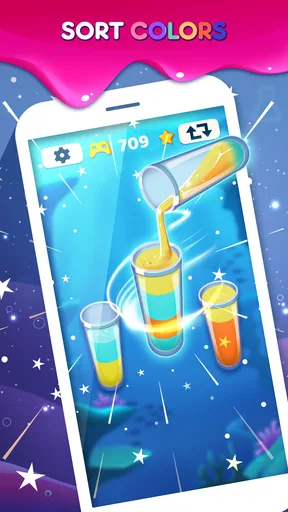
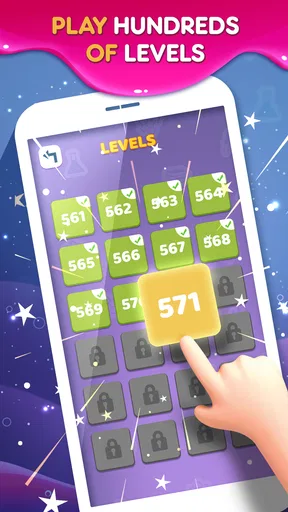


Our Review of Water Sorter
 Analysis by Appyee
Water Sorter is the kind of puzzle game I can open for a few quiet minutes and understand immediately. The screen presents a colorful mix that needs fixing, and the basic challenge is to pour matching colors into the right containers without leaving myself with an impossible arrangement. That simplicity is its biggest strength: I never need a tutorial-heavy introduction before making the first move.
After spending time with it, I see a game built for short, low-pressure sessions rather than a large adventure or a story-driven experience. It belongs to the puzzle category, is free to start, and is suitable for Everyone. Gimica GmbH is the developer, and the game has reached more than a million installs. Those details fit its broad appeal, but popularity alone does not make every puzzle game a good match, so the more useful question is how it feels during ordinary play.
How the sorting challenge works in everyday play
The central action is familiar: select one container, pour its top color into another container, and gradually separate the mixed layers until each color has a proper place. The rules are easy to grasp, but the order of moves matters. A pour that looks helpful can block a container, hide a useful color underneath another layer, or consume the space needed for a later combination.
I like this structure because it turns a very small action into a planning exercise. The game is not asking me to react quickly. It rewards looking at the whole arrangement, identifying which colors are exposed, and deciding which empty space should remain available. That makes it a comfortable choice when I want something interactive without the pressure of a timer-based arcade game.
A realistic use case is a short break between tasks. I can start a level while waiting for an appointment or during a commute, make a few careful pours, and stop when my attention needs to return elsewhere. It also works well as a wind-down activity because the visual sorting task gives my mind one clear problem instead of a stream of notifications or complicated objectives.
The important catch is that “simple” does not mean effortless. The early decisions usually feel obvious, but a careless pour can create a situation where the remaining colors no longer fit cleanly. When that happens, I have to retrace my thinking rather than blame the controls. For players who enjoy logic puzzles, that moment is satisfying. For anyone looking for constant novelty, it may feel repetitive.
Small decisions matter more than fast tapping
My most useful habit is to treat empty containers as strategic resources, not spare storage. I try to keep at least one open destination available before making a move that combines colors. Filling every available space too quickly can leave nowhere to place a newly exposed layer, even when the overall puzzle still looks close to solved.
I also scan the top layer of every container before touching anything. The visible color is the only immediate opportunity, while the colors underneath are future information. A good move often exposes a second matching layer, but a poor move can bury the color I need behind an inconvenient stack. This makes the game more thoughtful than its one-touch controls suggest.
Another practical tip is to avoid completing a color simply because it is possible. Finishing one container can be useful, but it can also remove a flexible space that would have helped organize two other colors. I get better results when I ask which move creates the most options, rather than which move looks most complete right now.
That approach is especially helpful when I am playing while distracted. Instead of tapping through possibilities, I pause after each pour and check whether the next two moves still have somewhere to go. It adds only a few seconds, but it reduces the frustration of reaching the final stage with a nearly solved board and no workable route.
Progress feels calm, but not endlessly fresh
The appeal of the progression comes from gradually handling more complicated color arrangements. Each puzzle gives me a contained objective, and solving it provides a natural stopping point. I do not need to remember a plot, manage a character, or learn a collection of controls. The mental workload stays focused on arrangement and sequence.
At the same time, the basic format does not change its identity. If I already know that water-sorting puzzles are enjoyable, this is a convenient version of that idea. If I need new mechanics, exploration, or a strong sense of discovery, the repeated pouring pattern may not hold my attention for long. I would choose a broader logic game for longer sessions where variety matters more than immediate accessibility.
The visual colors are central to reading the board, so players who have difficulty distinguishing similar shades may need to consider how comfortable the presentation is for them. The game’s concept depends on recognizing which layers match, and that is more important here than decorative detail. I would not recommend choosing it blindly if color identification is already a challenge in other games.
It is also worth remembering that the Everyone rating describes the intended age suitability, not whether every player will enjoy the experience. Younger players can understand the basic goal, while adults may appreciate it as a quiet logic exercise. The deciding factor is patience: the game asks for careful sequencing, and it does not become a fast reflex challenge simply because the controls are easy.
Free to begin, with a clear spending question
The game is free to download and play, while optional in-app purchases are listed between $0.99 and $3.49 per item. That gives me a straightforward starting point: I can try the core experience without paying first, then decide whether the available purchase options are worthwhile for my own routine.
I am cautious about treating a free puzzle game as completely cost-free in every practical sense. A player may encounter reasons to consider spending during play, but I do not want to invent a specific system or claim that a purchase is required when that has not been established. The fair conclusion is narrower: the confirmed purchase range tells me the game has optional paid items, while the value of those items depends on how often I play and what kind of help or convenience they offer in the actual session.
For me, the sensible approach is to play several levels without spending and judge whether the basic loop remains enjoyable on its own. If I am already tempted to pay simply to get past a puzzle I have not properly analyzed, I would stop and reconsider. A purchase should feel like a conscious choice, not the price of avoiding a moment of patience.
This is also where Water Sorter differs from a premium puzzle app. A paid alternative may offer a clearer one-time buying decision, while this free model lowers the barrier to trying it but introduces optional item spending. Neither approach is automatically better. People who dislike in-app purchases may prefer a paid logic game, even if they have to commit money before knowing whether its style suits them.
Fairness depends on how you define the challenge
For a sorting puzzle, fairness starts with whether the board can be understood and solved through planning rather than speed or payment. The core interaction gives me a direct relationship between my decision and the result: if I pour the wrong layer, I can usually identify the mistake in my own sequence. That makes the challenge feel personal instead of dependent on reflexes.
However, I separate fairness from convenience. If a player uses an optional item to make progress easier, that does not tell me whether the underlying puzzle is fair; it only tells me that spending may change the experience. Since the purchase information identifies item prices but does not establish a competitive system, I would not describe the game as pay-to-win. There is no verified basis for claiming that players compete against one another or that purchases affect a leaderboard.
That distinction matters. In a single-player puzzle, spending can potentially reduce friction, but it does not create the same competitive concern as buying an advantage over other people. I would still prefer to solve levels through observation because that preserves the reason I opened the game in the first place. The satisfaction comes from finding the sequence, not merely reaching the finish.
Players who want a completely controlled challenge should approach paid assistance carefully. If help is available, using it too early could remove the learning value of recognizing blocked colors and preserving empty space. My own rule would be to replay the arrangement first, then consider assistance only when I have genuinely exhausted the logical routes I can see.
What I would check before making it a daily game
The current version is 1.32.0, and it runs on devices using Android 7.0 or newer. That makes the compatibility requirement relatively approachable for people with older Android phones, although I would still check the device’s available storage and general performance before installing any game. Compatibility is not the same as comfort, especially on a small screen where layered colors can be harder to inspect.
I would also decide whether the game fits my preferred session length. It is a good match for short bursts, casual concentration, and players who like repeating a clear mental process. It is less suitable for someone who wants a campaign with characters, a changing world, or a large range of puzzle types. Compared with match-three games, it is slower and more deliberate; compared with crossword or word puzzles, it replaces language with spatial planning; compared with premium brain-training collections, it focuses much more narrowly on one sorting idea.
That narrow focus is both a benefit and a limitation. I never feel overloaded by menus or rules, but I also should not expect the variety found in a collection of unrelated logic challenges. If I want to practice one type of sequencing problem, the focus is welcome. If I want one app to cover deduction, memory, words, numbers, and visual reasoning, I would choose a broader alternative.
Another question I would ask is whether I enjoy restarting mentally after a mistake. The game’s best moments come from spotting a better order, but that requires accepting that a promising move may have been wrong. Players who dislike undoing progress or revisiting decisions may find the same structure irritating. Those who enjoy testing a hypothesis and correcting it will probably find the repetition more rewarding.
My trust verdict after weighing the trade-offs
Water Sorter succeeds because it makes a familiar puzzle immediately approachable while leaving enough room for careful planning. I appreciate that I can understand the objective in seconds, yet still improve by learning when to preserve space, expose hidden layers, and avoid premature completion. Those are small strategic lessons, but they make the difference between random pouring and deliberate solving.
The game is free, carries an Everyone age rating, and comes from Gimica GmbH. Its average rating is 4.2 from roughly 16,000 ratings, with about 2,900 written reviews, which suggests that many players have found the format appealing. I treat that as useful context rather than a guarantee: a strong response from other players cannot replace checking whether this particular kind of repetition suits me.
My honest recommendation is to try it as a calm, focused puzzle rather than expecting a deep game system. I would suggest it to someone who enjoys arranging colors, thinking several moves ahead, and filling spare moments with a self-contained challenge. I would skip it in favor of a richer puzzle collection if I needed constant new mechanics, and I would choose a paid alternative if optional purchases are a deal-breaker for me.
In the end, the most trustworthy way to approach it is to let the free starting experience prove its value. Play slowly, protect your empty space, and notice whether solving the arrangement feels satisfying before thinking about spending. If that simple loop keeps you engaged, Water Sorter is an easy game to keep nearby. If the narrow format begins to feel like busywork, no amount of colorful sorting will turn it into the broader puzzle experience you were looking for.
Verdict
Strengths of Water Sorter
- Simple controls make it easy for anyone to start playing.
- Short levels are ideal for quick breaks or casual sessions.
- Colorful liquid visuals are clear and pleasant to follow.
- Increasing difficulty keeps the basic sorting mechanic engaging.
- Works well as a relaxing, low-pressure puzzle game.
Limitations of Water Sorter
- Later levels can feel repetitive because the core mechanic rarely changes.
- Some puzzles may require trial and error rather than pure logic.
- Ads can interrupt the experience, depending on the version.
- The game may become too easy for experienced puzzle players.
- Progress could feel slow without optional hints or extra features.
Other Releases by Gimica GmbH
View All


Similar Picks in This Category
View All
Block Blast!
HungryStudio4.8

Braindom: Brain Games Test
Lahana Game Studio4.6

AMAZE!
CrazyLabs LTD4.6

Sudoku - Classic Sudoku Puzzle
Oakever Games4.7

Art Puzzle - Puzzle Games
Easybrain4.8

Amaze GO!
Oakever Games4.9
Frequently Asked Questions
What is Water Sorter and how do you play it?
Water Sorter is a color-sorting puzzle game in which you pour layers of colored liquid between bottles until every bottle contains only one color. You can tap a bottle to select it and then choose another bottle as the destination, provided there is enough space and the top colors match. The rules are simple, but later levels require careful planning and several moves ahead.
Is Water Sorter free to download and play?
Water Sorter is generally available as a free download, allowing players to access the main puzzle experience without paying upfront. However, the game may include advertisements, optional purchases, or paid features depending on the version and platform. Before downloading, it is worth checking the store listing for the current pricing, advertising policy, and any in-app purchase information.
Does Water Sorter work without an internet connection?
In many cases, Water Sorter can be played offline, which makes it convenient for travel, waiting rooms, or situations without mobile data. Basic puzzles typically do not require a constant connection, although advertisements, cloud progress, updates, leaderboards, or other online services may be unavailable offline. The exact behavior can vary between Android and iOS versions.
Is Water Sorter suitable for children and casual players?
Water Sorter is easy to understand and does not require fast reactions, making it suitable for casual players and many children. The colorful presentation and straightforward controls are approachable, while the increasing difficulty provides a useful mental challenge. Parents should still review the app’s age rating, advertising, and purchase settings, particularly if the game will be used on a child’s device.
What should I know about ads, hints, and level difficulty?
The early Water Sorter levels are usually relaxed and help you learn the pouring rules, but the puzzles become more demanding as additional colors and bottles are introduced. Some versions offer hints, undo moves, or extra bottles, often connected to advertisements or optional purchases. If you prefer uninterrupted play, review the available ad-removal options and remember that using hints can reduce the challenge.
Play our best games!


